Medical History
Avicenna and the Canon of Medicine
21 September 2026 · 14 min read
The life of Ibn Sina, his medical and philosophical scholarship, and the foundations of diagnosis described in the Canon of Medicine.
Abn Ali Al Hosain Ibn Abdallah Ibn Sina, known in Latin as Avicenna, was born at Kharmaithen in the province of Bokhara in 980 and died at Hamadan in Northern Persia in 1037. His life is recorded through his autobiography and the account written by his disciple Jorjani.
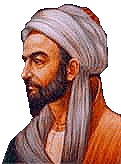
Avicenna grew up during political instability in the Samanid empire. His father was a respected and learned governor whose home welcomed scholars, and Avicenna was educated there. By the age of ten he had memorised the Koran and much Arabic poetry; he began studying medicine at thirteen and treating patients at sixteen.
He also studied logic and metaphysics, often teaching himself with help from the best teachers available at important moments. His medical reputation brought him to Sultan Nuh ibn Mansur, whom he successfully treated. As a reward, Avicenna gained access to the Samanid royal library, an exceptional opportunity when books were copied by hand.
After the Samanid empire fell and his father died, Avicenna travelled through Khorasan as a physician, administrator, jurist and teacher. He later worked in Hamadan as a court physician and was twice appointed vizier. Political conflict forced him into hiding and imprisonment before he escaped to Isfahan disguised as a Sufi.
At Isfahan he completed major works on philosophy, medicine and Arabic. He accompanied his patron on military campaigns and continued writing during those journeys. He became ill on one campaign and died after an illness reported as colic, although the account also records the possibility of poisoning by a servant.
The Book of Healing and the Canon of Medicine are his two most important works. The Book of Healing is a scientific encyclopaedia covering logic, natural science, psychology, geometry, astronomy, arithmetic and music. The Canon of Medicine became one of the most influential medical books in Asia and Europe and remained an authority in medical schools for centuries.
Avicenna is credited with approximately 450 works, of which about 240 survive. Around 150 concern philosophy and about 40 concern medicine; other writings address psychology, geology, mathematics, astronomy and logic. He also wrote on astronomy, including observations about Venus and the finite velocity of light, and sought to relate science, religion, law, government and metaphysics in one philosophy.
In the Canon, Avicenna defines medicine as the science that teaches the states of the human body in health and illness, how health is lost, and how it may be restored. He insists that treatment requires knowledge of the causes of health and disease, inferred from signs and symptoms when direct observation is not possible.
He describes four causes: material, efficient, formal and final. The material cause is the physical body, including organs, vital energy, humours and elements. The four elements are earth, air, fire and water, with qualities of hot, cold, dry and moist whose equitable combination gives each body and organ its temperament.
The humours arise through digestion and are described as blood, phlegm, yellow bile and black bile. They correspond to the elemental qualities and support the organs. Illness may follow a quantitative or qualitative change in a humour, while health means a dynamic balance appropriate to the individual constitution and environment.
The Canon also discusses temperaments, the psychic faculties, vital force, organs, efficient causes and the vital faculties. The vital force links body, soul and spirit; its natural, animal and psychic aspects are associated with the liver, heart and brain. The formal causes include temperament, faculties and structure, while the final causes are the actions and functions of the body.
Avicenna's account presents diagnosis and treatment as an effort to understand causes rather than merely naming symptoms. It places the individual body, its environment, its constitution and its balance at the centre of medical reasoning.